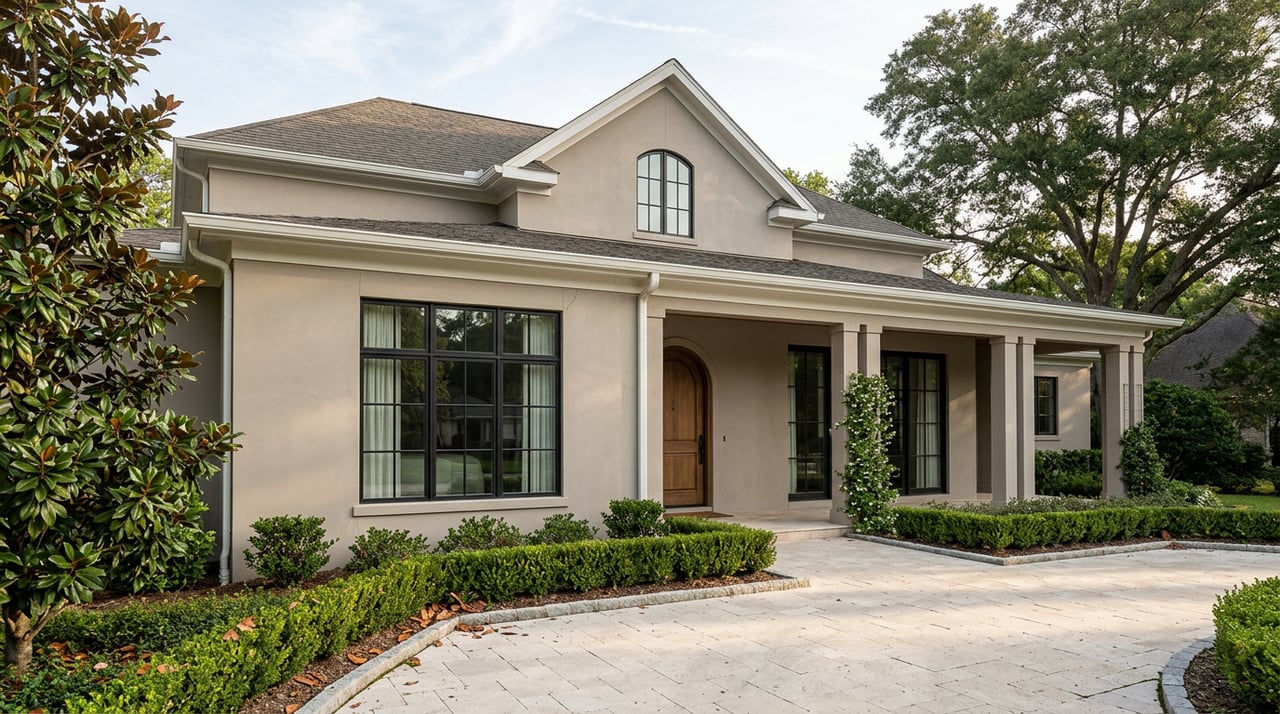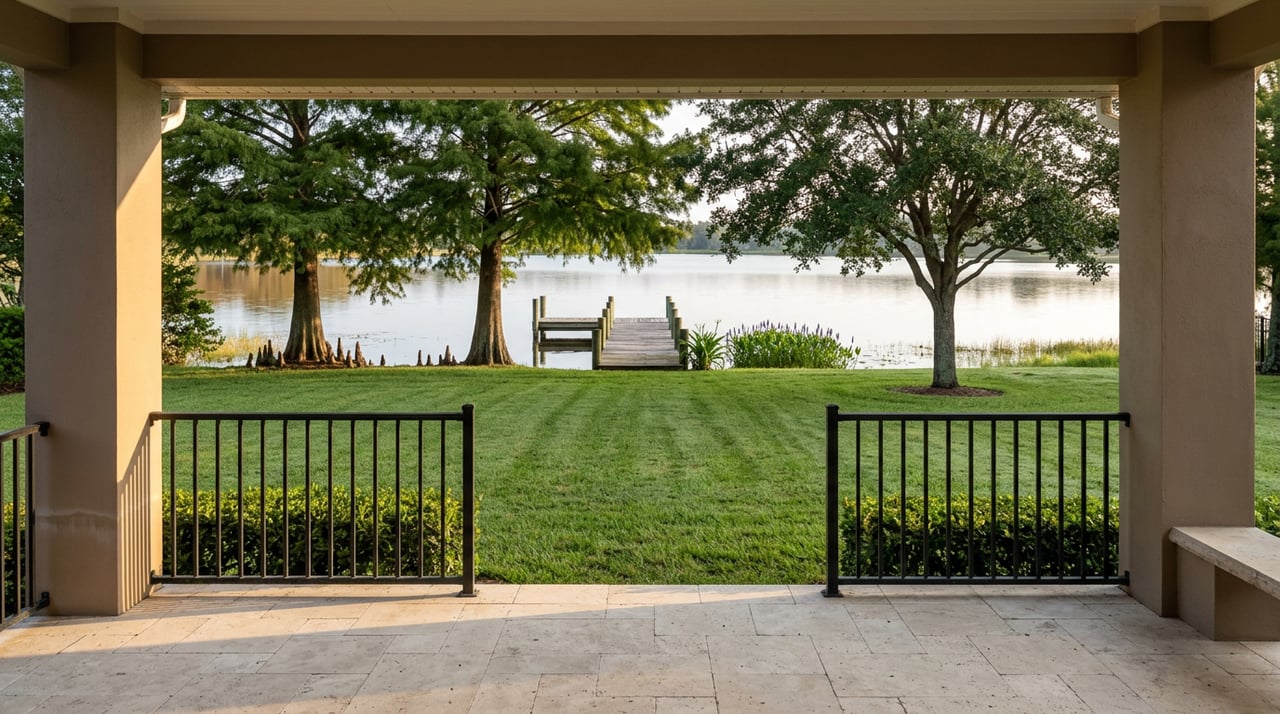
Two houses sit across a narrow stretch of water from each other on the canal that links Lake Maitland to Lake Osceola. Same chain. Same view of cypress knees and boathouse roofs. Same kind of buyer, probably, picturing a dock repair or a cleared sightline to the water. But one of those homes answers to the City of Winter Park's Lakes & Waterways Advisory Board. The other answers to Maitland's Community Development Department. Neither buyer will find that out from the listing sheet.
That's the part of buying on Maitland's lake chain that doesn't show up in a walkthrough. The house is what you're buying, but the water in front of it is what you're allowed to touch, and that permission runs through whichever city's code happens to govern that particular stretch of shoreline. On a lake that straddles two municipalities, as several on this chain do, the property line on the deed and the regulatory line that actually matters aren't the same line.
The Border Runs Through the Water, Not the Deed
The Winter Park Chain of Lakes, the connected system of six lakes and the canals between them, sits across both Winter Park and Maitland. The chain runs Lake Virginia, Lake Mizell, Lake Osceola, Lake Maitland, Lake Nina, and Lake Minnehaha, joined by canals including the Fern Canal and the longer Venetian Canal. Public boat access sits on both sides of that line too: Dinky Dock on Lake Virginia is a Winter Park launch, Fort Maitland Park on Lake Maitland is a Maitland launch, and Kraft Azalea Gardens sits along Lake Maitland as a third put-in point for paddlers.
That geography means a homeowner's dock repair, seawall replacement, or shoreline clearing project on this chain doesn't get filed with one office. It gets filed with whichever city's building and environmental review process actually governs the shoreline in front of that specific parcel, and that isn't always the city most people would guess from the mailing address.
Same Lake, Two Rulebooks
The two cities that split this chain didn't write the same permitting process, and the differences aren't cosmetic.
| Project | Under Winter Park's code | Under Maitland's code |
|---|---|---|
| New dock or boathouse | Reviewed by the Lakes & Waterways Advisory Board, which meets monthly. A site plan must be approved before a building permit can even be applied for. Only one dock or boathouse is allowed per residential shoreline. | Reviewed through the city's standard permit process. Any waterfront structure falls under its own permit category, separate from a typical home renovation permit. |
| Clearing vegetation or altering the shoreline | Requires a Shoreline Alteration Permit. With that permit, a resident may clear an access corridor no wider than 50 feet, or 50 percent of the property's frontage, whichever is smaller. The permit fee is $100, with a building permit fee added on top if the project involves structural work. | Requires permit approval before any aquatic plant removal or shoreline alteration takes place, administered through the city's Lakes Management Division. |
Winter Park's process is the more codified of the two, with a published board, a published meeting cadence, and a published fee. Maitland's approach is folded into its broader Lakes Management Division, which oversees what the city describes as 21 lakes, canals, and waterways citywide, aquatic plants and shorelines included. Neither process is harder to work with than the other. They're just different enough that a buyer who assumes one applies because a neighbor mentioned it can lose weeks confirming that assumption after closing instead of before.
The Permit Nobody Budgets For
Ask most lakefront buyers what permit they're expecting to deal with and they'll say the dock. Maybe the seawall. Almost nobody names the one that governs the water's edge itself.
On the Maitland side of this chain, and across the city's other lakes, private property owners must receive permit approval before removing aquatic plants or altering a shoreline. That's not a dock permit or a building permit. It's a separate approval tied to what's growing at the waterline and how much of it a homeowner is allowed to clear.
The dock is the part everyone plans for. The shoreline in front of it is the part that actually needs the city's sign-off first.
Winter Park spells out the mechanics of that same idea in more detail. A Shoreline Alteration Permit is required for any aquatic vegetation removal, and even with a permit in hand, the clearing is capped at a defined corridor rather than left open-ended. A buyer picturing an unobstructed water view the week after closing is picturing a project that has a permit process attached to it, on either side of this chain.
What's Actually on This Chain
Maitland's lakefront isn't limited to the six connected lakes shared with Winter Park. Lake Sybelia, covering roughly 82 acres according to Orange County's Water Atlas, sits entirely within Maitland and outside that connected canal system. So do Lakes Faith, Hope, and Charity, three of the smaller lakes the U.S. Geological Survey has studied as part of a long-running water quality record for the area, alongside a fourth, Lake Lucien.
The distinction matters for anyone comparing waterfront options inside Maitland rather than assuming every lake behaves the same way. A parcel on Lake Sybelia is a Maitland-only conversation. A parcel on Lake Maitland or the connected canals can be either a Maitland or a Winter Park conversation, and sometimes both, depending on exactly where the shoreline sits.
One rule holds across the whole connected chain regardless of which city you're in: a motorized boat needs a permit issued by either the City of Winter Park or the City of Maitland to operate on the lakes and canals, while paddle craft, kayaks and canoes and paddleboards, don't need that permit at all. It's a small distinction, but it's the kind of detail a buyer who pictures weekend boating wants settled before they assume a boat comes with the house the way a dock does.
Before You Write the Offer
A few questions are worth answering before a lakefront offer goes in on this chain, not after.
- Which city's code actually governs this specific shoreline. Don't assume it matches the property's mailing address.
- Whether the existing dock, boathouse, or seawall has a permit on file, and with which city. A structure without a documented permit history can complicate future repairs or replacements.
- Whether any planned shoreline clearing, for a view or for boat access, falls within an allowed corridor or requires a separate application first.
- Whether the property sits on a lake inside the connected six-lake chain or on one of Maitland's standalone lakes, since that changes which office to call with questions.
None of this changes whether a lakefront home on this chain is worth buying. It changes how much runway a buyer needs between an accepted offer and the first weekend they'd planned to spend at the water's edge.
A Few Questions Worth Asking First
Does a paddleboard or kayak need a permit on this chain? No. The permit requirement for motorized boats on the Winter Park and Maitland lakes and canals does not apply to non-motorized craft.
If my dock already exists, do I still need to worry about permits? An existing structure doesn't remove the need to confirm its permit history. Both cities' processes tie future repairs and replacements to what was originally approved, so knowing what's on file matters even for a dock that's already built.
Is Maitland's process less strict than Winter Park's because it's less detailed? Not necessarily. Winter Park's process is more publicly codified with a named board and published fee schedule. Maitland's runs through its Lakes Management Division as part of its citywide lake and waterway program. Different structure, not necessarily different rigor.
A shoreline on this chain is one of the few features in Central Florida real estate where the regulatory map and the plat map genuinely disagree. Knowing which city holds the answer before an offer goes in is the difference between a smooth closing and a summer spent on hold with two different permit offices.
If you're looking at a home on Maitland's lakes or anywhere else along the Markham Woods corridor, Winter Park, or the rest of North-Central Florida, Jen King can walk you through exactly what a specific shoreline allows before you write an offer. Get Your Instant Home Valuation to see where your search should start.