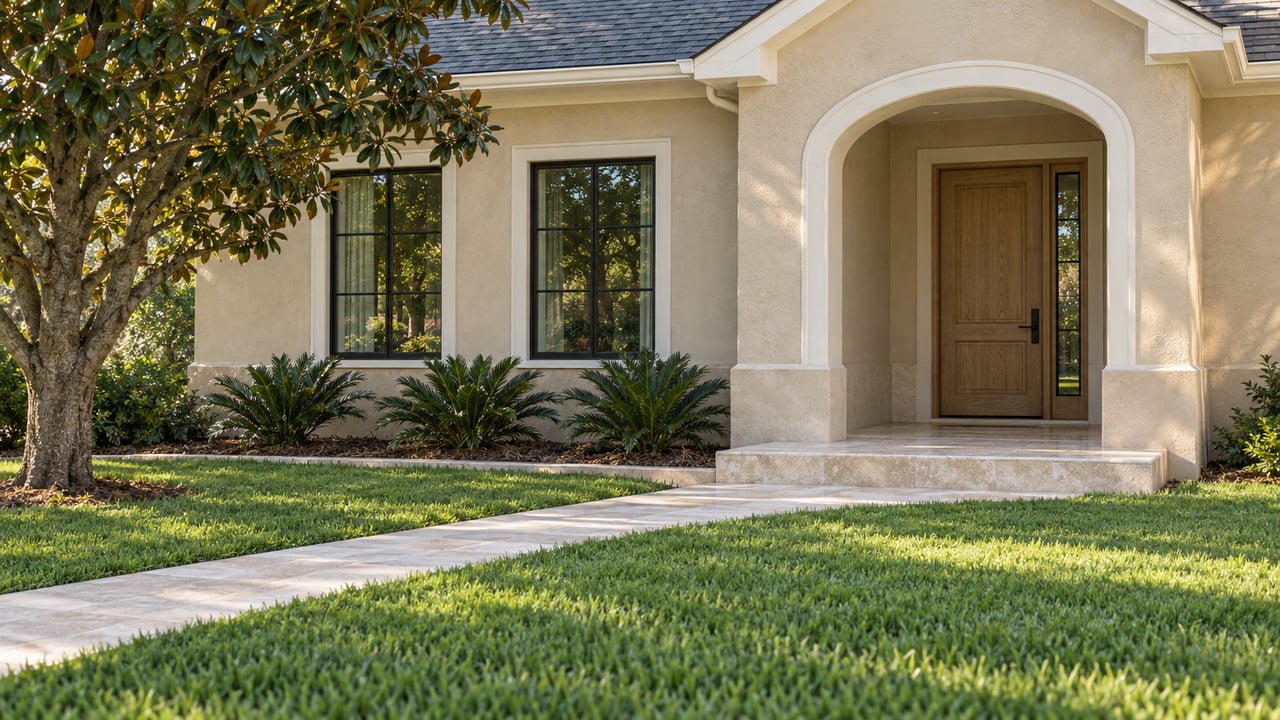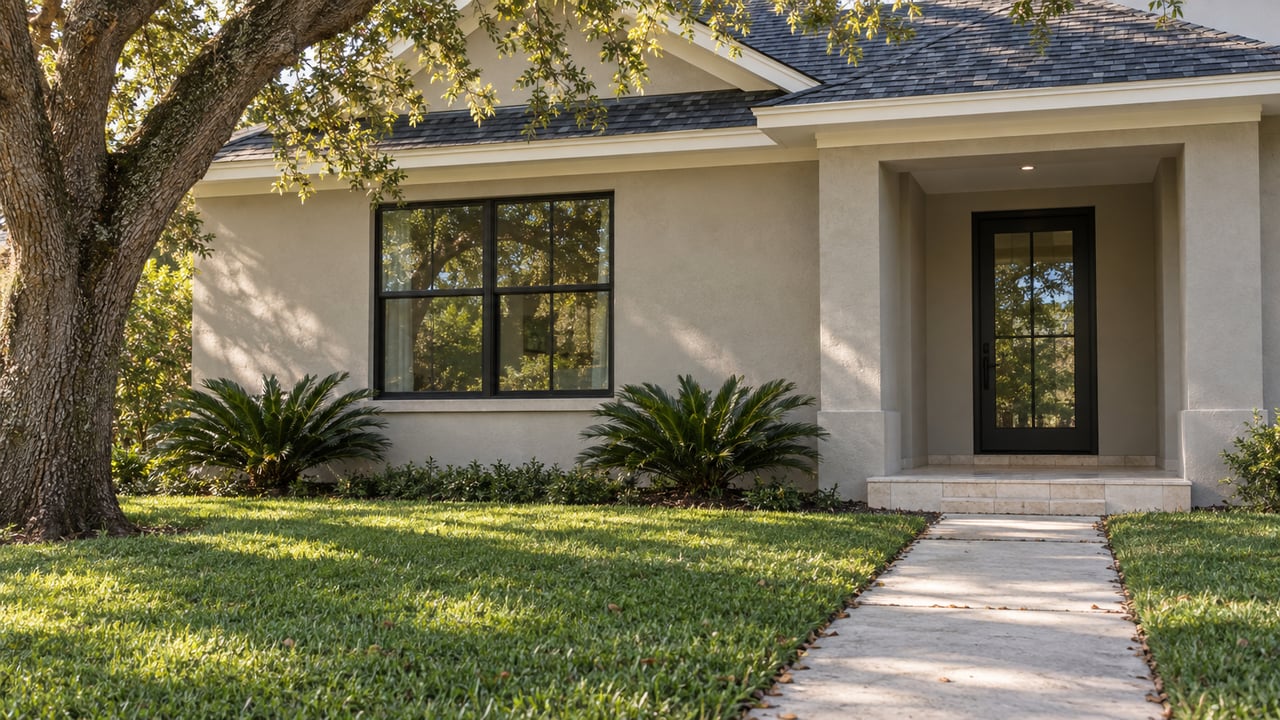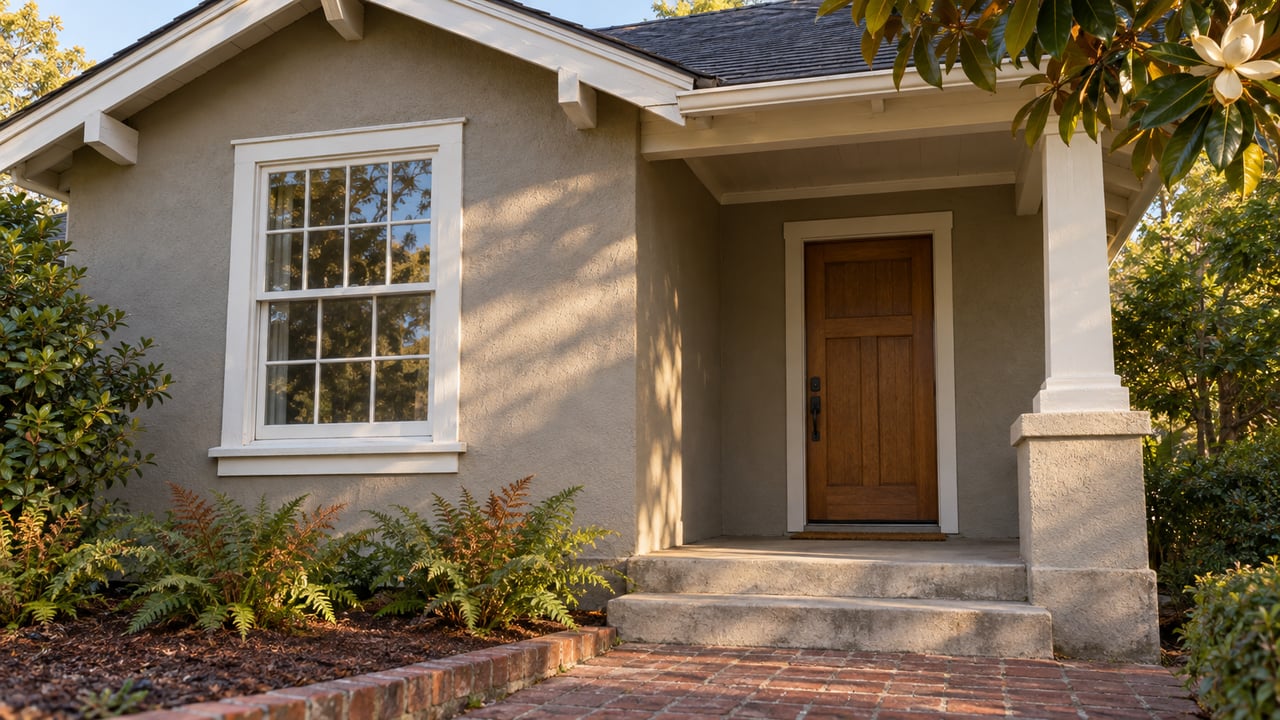
"Any exterior work, including repairs, new construction or site work" on a property in Sanford's Residential Historic District "must receive a Certificate of Appropriateness (COA) before the work begins." That line comes from the City of Sanford's own application guide. It also notes that a building permit may be required on top of the COA.
That sentence sits next to another set of rules a buyer meets during the same weeks. Florida homeowners insurers, and Citizens Property Insurance in particular, decide whether an older house is insurable based on its roof, wiring, plumbing, and mechanical systems. Underwriting starts its clock at the coverage date you request. The City's clock starts when you file a complete application. In this district, a buyer's inspection report is really a sorting exercise. Some repairs move through City staff fast enough to line up before closing. Others go to a monthly public board meeting and belong in a post-closing plan.
A House Built for 1910, Read by a Form Written for 2025
The Sanford Residential Historic District runs roughly from South Elm Avenue on the west to South Palmetto Avenue on the east, and from West Second and Third Streets south to Thirteenth Street. Its National Register nomination lists a period of significance of 1880 to 1933 and counts 434 contributing and 69 noncontributing buildings. Most houses are vernacular frame homes, often two stories, with porches and wood-sash windows. Bungalow, Colonial Revival, Mission, Spanish Colonial Revival, and Queen Anne influences run through the streets.
Every one of those houses is well past the age where Citizens asks for a four-point inspection, which covers roof, electrical, plumbing, and HVAC. Citizens requires the report on dwelling applications for properties more than 20 years old and advises repairing serious hazards before applying. The current form records cloth wiring, active knob-and-tube, and aluminum branch wiring along with any remediation. It also records pipe types such as galvanized, cast iron, polybutylene, and PEX. A March 2025 update added the age of supply and drain piping, water-heater age, and the PEX installation year. For a house from the 1910s, the inspector is recording a century of partial upgrades. Florida's Department of Financial Services notes that underwriting guidelines vary by insurer. A carrier can decline coverage if requested inspection material isn't provided.
Wiring and plumbing are mostly interior work and fall outside the COA requirement for exterior work. The roof and the windows are the two items where the four-point findings and the preservation code cover the same part of the house.
The Roof Sits in the Fast Lane, and the Material Counts Twice
Sanford sends roofs and gutters to minor review by City staff, on a minor-review list that also includes paint, fences, awnings, signs, exterior lighting, mechanical systems, and replacement in the same or like material. Major reviews go to the Historic Preservation Board. A roof application needs photos of the affected facades and a description or sample of the materials, including roof color. That is a short packet, and a roofer can assemble most of it from the inspection photos.
Material choice affects both rulebooks at once. Schedule S says red cedar or white oak shingles, galvanized steel, and asphalt shingles are "consistent with most styles in the Sanford Residential Historic District." Citizens, for its part, requires documentation of a full roof replacement on shingle roofs older than 25 years and on metal, tile, slate, clay, or concrete roofs older than 50 years. An exception route allows a roof to stay if documentation shows at least five years of remaining useful life.
| Roof material | Schedule S, residential district | Citizens replacement threshold |
|---|---|---|
| Asphalt shingle | Listed as consistent with most styles | Over 25 years |
| Galvanized steel | Listed as consistent; must be standing seam, stamped metal shingle, full corrugated, 5V crimp, or simulate standing seam | Over 50 years |
| Wood shingle, red cedar or white oak | Listed as consistent with most styles | Over 25 years, under "shingle or other" |
A galvanized metal roof that meets the district's profile and color rules lasts twice as long under Citizens' published age rules as a shingle roof does. Schedule S limits metal roofs to copper, galvanized, silver, or gray, or finishes that simulate a historic patina. It also treats significant rust or corrosion as prima facie evidence of a nuisance. Other details reach the estimate too. All pitched roof planes have to match. Roof vents can't sit on a primary facade visible from the street. Gutters must be galvanized steel, wood, copper, or painted aluminum.
State law sets a floor under all of this. Under section 627.7011 of the Florida Statutes, an insurer can't refuse or nonrenew a policy solely because a roof is under 15 years old. For a roof 15 years or older, the insurer must allow an inspection first and can't reject the roof on age alone if the inspection finds at least five years of useful life. The 2026 session's attempt to rewrite roof-age rules, HB 815, died in committee on March 13, 2026, so those protections remain in place.
How the 30-Day Exception Lines Up With a Staff Review
When a newly purchased house has a damaged roof or less than five years of remaining life, Citizens may still accept an unbound application. Under its September 2025 guidance, these conditions apply.
- The purchase must happen within 45 calendar days of the coverage effective date requested on the application.
- A roofing contract has to be submitted with the application. It must be written by a licensed general, residential, building, or roofing contractor responsible for the work and signed by the buyer.
- The contract must state that a full roof replacement will be completed within 30 days of the requested effective date.
- Underwriting keeps a 60-day discovery period, and the exception doesn't satisfy any other eligibility requirement.
Inside a historic district, step three is more than a scheduling promise. In Sanford, the roofer can't start until the COA is issued, and a building permit may also be needed. The City's guide doesn't publish a turnaround time for staff review. It does say an application must be complete before staff or the board will review it. The practical move is to have the roofer prepare the COA packet during the inspection period. That means a front-facade photo, photos of the affected facades, a material spec that matches the table above, and a roof color. The packet can then go into Citizenserve, the City's online application portal, the day the house closes.
One newer Citizens process helps at the front end. Starting July 2, 2026, for policies effective August 1, 2026, Citizens automatically retrieves available roof-update years on new-business applications. Every other age and remaining-useful-life requirement still applies.
Windows Pull the Two Rulebooks in Opposite Directions
Florida law tells insurers to offer actuarially reasonable discounts or credits for verified wind-mitigation features, including opening protection and the strength of windows and doors. A revised wind mitigation form, OIR-B1-1802, took effect April 1, 2026. It rates a home's glazed-opening protection by the weakest protection among those openings. Its tested levels include Level A, based on a 9-pound large-missile test. According to the state Department of Financial Services, those discounts apply to windstorm coverage rather than the whole premium and depend on the features an inspector actually documents. Since the form rates the weakest opening, protecting only some windows won't raise the rating.
Schedule S starts from the opposite end. Windows, frames, glass, muntins, and sills that are in good condition or repairable "shall be retained." If a window is found to be beyond repair, a replacement on the primary facade of a contributing building must match the original in size, configuration, material, design, and placement, and a window survey has to come with the COA application. On secondary facades, replacements may differ in design or type as long as they suit the style of the building. The code also requires true or simulated divided lites, an internal shadow bar on double-pane units, and clear glass with no more than ten percent daylight reduction, and it prohibits reflective glass and film. Where storm windows are approved, they go on the interior of historic windows.
Window replacement in a different material isn't on the staff-review list, so it goes to the Historic Preservation Board. According to the City of Sanford, the board meets on the third Wednesday of each month at 5:30 p.m. in the City Commission Chambers at 300 N. Park Avenue, and applications are due by the first of the month. Under that published schedule, a complete application filed by October 1, 2026 would go to the October 21 meeting. An application filed October 2 would wait for November 18. A buyer can't fit a full window replacement on a contributing house into an insurance condition before closing. It belongs in a first-year plan that starts with which windows are actually beyond repair and whether the house is contributing at all. The City's historic preservation page links a map of its local historic districts.
What Happens When Work Starts First
The clearest recent example in Sanford is commercial, but the rule behind it is the same one that governs a bungalow on Magnolia Avenue. At the 1922 former First National Bank at 101 E. 1st Street, GrowthSpotter reported that the City issued a stop-work order in March 2025 after excavation and staging began without a COA or a building permit. The Historic Preservation Board later rejected a proposed external elevator tower taller than the historic building and found the plans too thin to establish compatibility. On January 20, 2026, the City Commission denied the appeal. A month earlier, Suncor Properties won unanimous board approval for First Street Station at 200 W. First Street. That approval came after two continuances and revisions to the storefront windows and cornice detailing. In both cases the board looked closely at windows.
Help exists on the residential side too. The Sanford Historic Trust, a nonprofit formed in 1989 and independent of the City, runs an annual Tour of Homes. Proceeds fund exterior repairs for residents with financial or physical needs. The Trust's 2025 preservation awards went to properties at 105 Alden Drive, 1201 Magnolia Ave., 918 Myrtle Ave., 2008 Hibiscus Court, and 219 Laurel Ave. Its award criteria favor original windows and wood or wood/vinyl-clad replacements in the original style. That guidance is the Trust's own, not City code.
A Few Straight Answers
Do hurricane shutters need approval?
Schedule S doesn't address shutters directly in the sections reviewed here. Its definition of "mothballing" does exclude permanently installed, custom-manufactured storm shutters and temporary boarding of four to five days during a declared emergency. For a permanent installation, confirm with Sanford Planning at 407-688-5183 before ordering.
What does a COA cost?
The City routes fees through Citizenserve and doesn't post a dollar amount on its preservation page.
Can I tear down an outbuilding or a damaged structure?
Demolition has its own COA section in Schedule S, with review criteria, a waiting period, hardship provisions, and demolition-by-neglect rules. City documents number that section differently, so ask Planning staff which version applies.
Will an insurer reject a house over galvanized or cast-iron pipes?
The Citizens form records those pipe types. Whether they affect eligibility depends on each carrier's underwriting, so ask your insurance agent about your specific report.
If you're weighing an offer on a house in Sanford's historic district, Jen King can help you sort the inspection report into roof work you can plan before closing and window work for the board calendar after it, so you know the insurance deadline and the City's review order before you sign.
This article is general information, not legal, tax or financial advice. Consult a qualified professional about your situation.